
How Do Airbnb Discounts Work?
If you have been in the short-term rental industry, even for a very limited time, you must have wondered at some point how Airbnb discounts work and what their perks and effects on your visibility are. Let me start with the conclusion, and then we’ll discuss the reasoning.
Best Combination of Discounts on Airbnb
- Gradual Last-Minute Discount – This will activate a “Price Drop Promotion.”
I personally use 30% for the next 3 days, 20% for 4-7 days, 10% for 8-18 days- Strikethrough styling + Special callout
- Weekly: 10%
- New line item + strikethrough styling
- Monthly: 20%
- New line item + strikethrough styling + placement in emails
- Early-Bird: 3%
- Special callout
*Length-of-stay discount merchandising isn’t available for listings using a Length-of-Stay Records pricing model through connected API tools.
** Strikethrough pricing also doesn’t apply to listings using this pricing model.
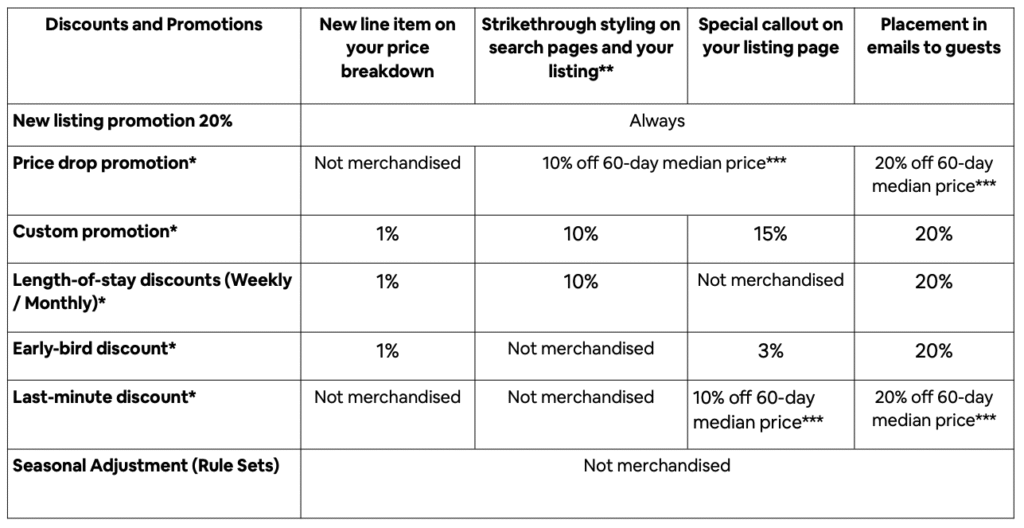
Check end of the blog post for Airbnb discount merchandising.
Why You Need Airbnb Discounts
Discounts are one of the most essential tools you can use to drive visibility and bookings. Although they result in a lower rate, they drive revenue on a yearly basis, and yearly revenue should be your main objective when running a short-term rental. I often get this question from our users who are not very familiar with revenue management:
What will be our nightly rate?
Focusing solely on the nightly rate will make you lose sight of your main objective: driving yearly revenue. In general terms, the sub-goal of your main objective is to sell each and every day with the highest optimum prices. This means you should charge a premium for peak days—sometimes 2-3x more than your regular rates—and sell at a discounted rate to capture the weak demand before your competition does.
And here we are to address how Airbnb discounts work.
Types of Discounts on Airbnb
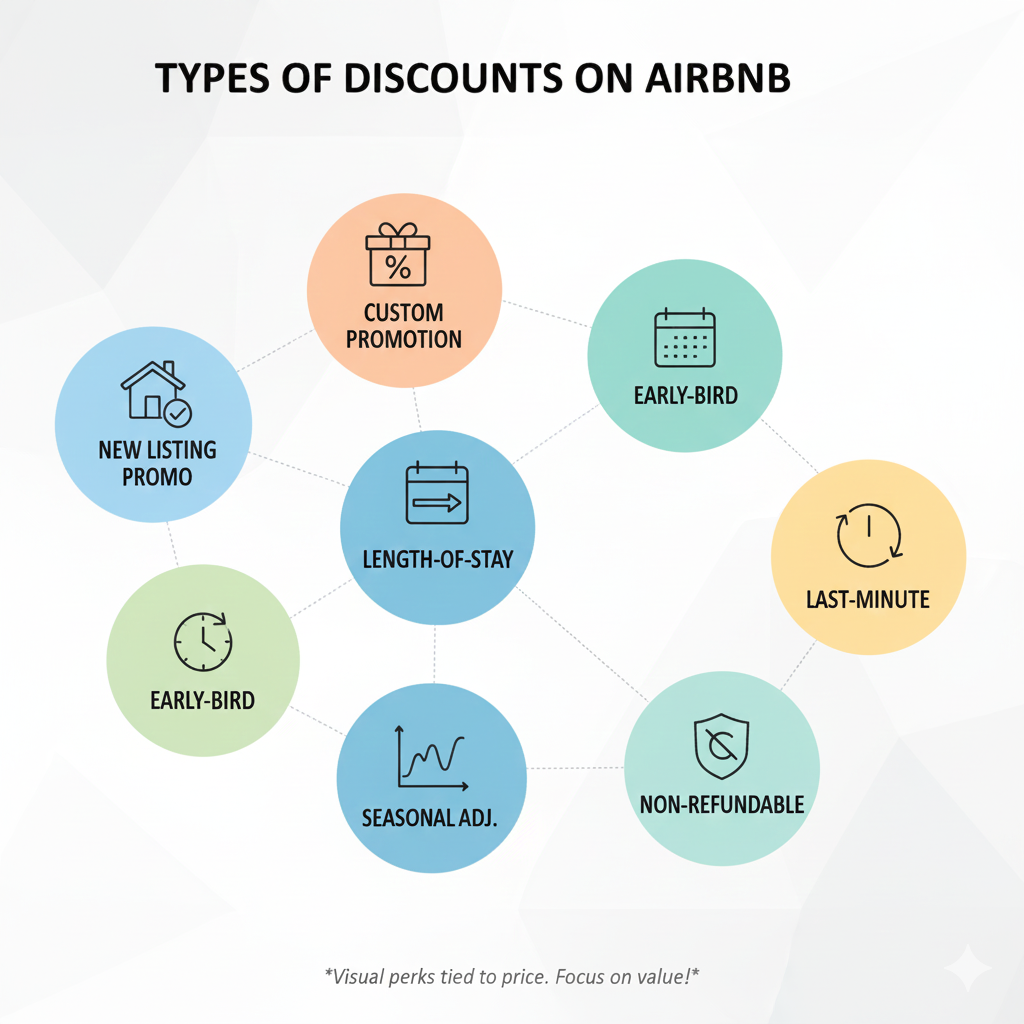
There are 7 types of discounts at your disposal on Airbnb:
Spoiler alert: None of them boost your visibility just because you select one; it is all tied to the price. However, there is a possibility that a discount can increase your conversion rate.
Airbnb New Listing Promotion
For new listings, you can offer a 20% discount on the next three bookings. Eligible listings must have fewer than three bookings and disabled Smart Pricing (don’t ever turn Smart Pricing on for the sake of your revenue).
It is essential to keep in mind that Airbnb boosts new listings to give them a fair chance in a pool of endless and well-established options. Without this artificial boost, backdooring the search algorithm mechanics, you would have 0 chance to be seen and booked. For more information about this boost, check our blog.
This boost is not tied to the new listing promotion. However, since you are giving a discount, and as the price is one of the key indicators of ranking visibility in broad terms—lower the price, higher the rankings, and higher the possibility to get a booking—if you have a reasonable price, you don’t need to have this promotion in my honest opinion. The only extra you would get will be in optics, which might affect your conversion rate (more on this later).
One final remark about the new listing promotion: if you decide to move forward with this discount, keep an eye on when it ends. Once it is removed, it could have a significant negative effect on your visibility, thus you might need to lower your price or give another discount from the list below.
Airbnb Custom Promotions
Custom promotions are a type of discount you can set up from the Airbnb calendar. It is like a gamified discount shop specifically designed to nudge you to give a discount at a higher rate. I say this because as the level of pre-determined discount percentages increases, the perks you get in return increase as well, and you can see that fact on the very screen you are setting the promotion. Basically, there is a discount slider, and as you stretch it to the right, new types of marketing gimmicks become available.
You have to have at least 3 bookings to activate this promotion.
In other words, a 15% custom promotion and a 15% manual price reduction place your listing in the same competitive position in search, assuming all other variables remain constant.
The only meaningful difference comes from the merchandising layer:
the visual badges that appear on the listing pages only. These elements do not boost visibility on their own, but they can slightly improve conversion rate by drawing the guest’s attention and framing the price as a “deal.”
This is why custom promotions should not be seen as a visibility lever. If the discounted price itself isn’t competitive, no amount of sliders, badges, or callouts will compensate for it.
Airbnb Length-of-stay Discounts
Give guests a discount for booking longer stays. You can discount by the week, month, or a custom timeframe that you create.
This is an essential setting to influence your length of stay. If you’d like to extend reservation lengths, use these settings and don’t go easy on them. I like to increase them significantly during low season periods when demand is low. I don’t want to fight for every 2 days; instead, I would prefer to capture those rare guests who would spend a month in the city for whatever reason and have peace of mind for a while.
If you’d like to implement this tactic, make sure to block or offset the discounts for high periods, as you don’t want to give away a cheap and lengthy stay for peak season.
Early-bird Discount
Encourage guests to book in advance by adding a discount for reservations made in advance. You can choose a lead time 1-24 months ahead of arrival.
Personally, I wasn’t a fan of this discount as I like to get the most out of far-out bookers until I heard the that it triggers 2 different merchandising tools in return of as little as 3%.
Last-minute Discount
Reduce your nightly price as the check-in date approaches to help attract guests who book close to check-in. Pick dates that are 0-28 days from check-in.
This is obvious. In order to increase your chances of getting booked, you must give last-minute discounts. In highly competitive markets, it is better to fill your calendar beforehand with competitive prices. Otherwise, you will often find yourself in a price war, fighting for the few last-minute bookers. Personally, I prefer not to receive many last-minute bookings as I feel those types of guests are the hardest.
Seasonal Adjustment (Rule Sets)
Professional tools users can create custom pricing and availability rules that can be saved and applied to multiple listings on multiple date ranges to take advantage of seasonal trends.
If you are not using a dynamic pricing engine like Homesberg and operating in a seasonal location, this might be your only chance to adjust your price year-round—and it is not very efficient. Rule sets are not limited to prices; you can alter your availability settings, too.
Note: Once a rule-set is applied, it will override any existing nightly pricing and availability settings, including Smart Pricing (I repeat, no serious host uses this).
Non-refundable Cancellation Policy
You can offer a discount, typically 10% off the base price, and guests will have the option to choose between your standard rate, subject to your cancellation policy, or the discounted non-refundable rate.
Guests love flexibility, and this might be the option to charge extra for that. Just be aware of the qualities of your listing and the dynamic of the market you operate in. Under some conditions, it might be very difficult to find other guests on short notice if the cancellation policy is too flexible.
These are the types of discounts you can apply. In general, you should have a structure to a set of discounts to automate actions. At times, you are going to need to manually adjust further.
Day-to-day pricing decision is essential in revenue management.
Perks and Merchandising You Get on Airbnb in Return for Discounts
Giving any of these discounts or all of them together will not affect your search visibility; giving a discount itself does. So, if you are artificially increasing your price and reducing it with the discount buttons at your disposal, you are wasting your efforts (or “punching the air”).
However, when you apply discounts with necessary thresholds, you get some merchandising in return. These are little nudges to the guest’s eye, and they might appeal to their psychology and influence consumer behavior.
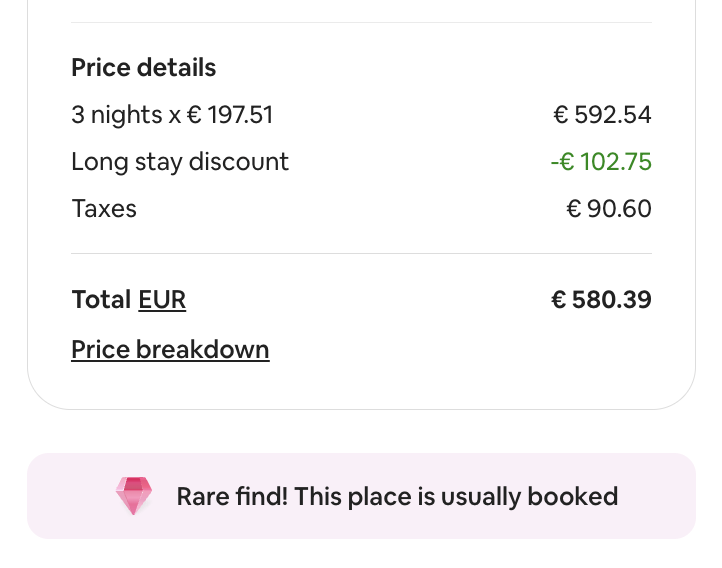
New Line Item on Price Breakdown
Arguably the most unnecessary merchandising you get. For a guest to see this, they already need to see the full price and proceed to the payment page.
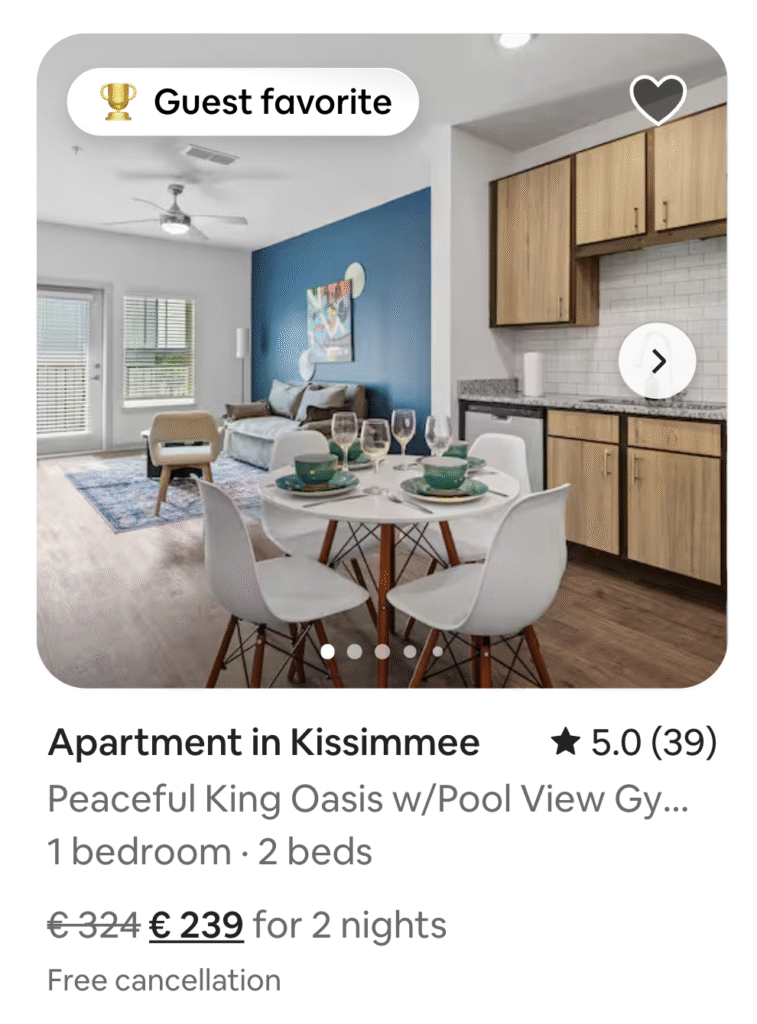
Strikethrough Styling on Search Pages and Your Listing
This is the best type you will ever get because this appears both on the search page—while guests are looking for a candidate listing to commit and click—and on the right-hand side when they are on your listing page.
Strikethrough pricing is one of the 7 commonly accepted psychological pricing strategies. It taps into the consumer mind in several different ways. The most important thing to care about when using this is it has to be genuine. The moment it feels inflated, you will lose trust and be skipped for good.
Special Callout on Your Listing Page
These are different types of badges around the pricing details and reserve button in your listing. It comes with a few different types, indicating that the price offered is lower than the median or regular rates.
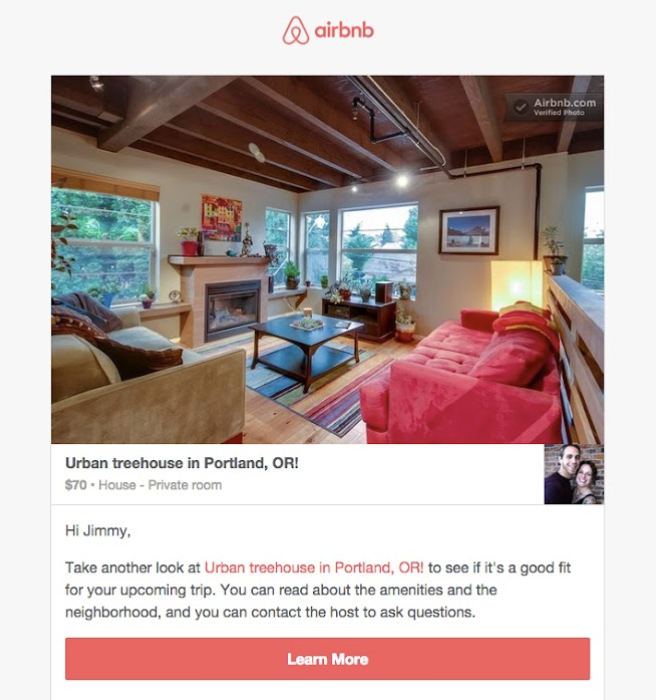
Placement in Emails to Guests
I have never booked or met with a person who booked a listing through an email campaign, but who knows. Airbnb sends emails to guests who looked for accommodation in a search location but have not booked yet. Under the right circumstances, you can be that listing in the mailing.
Airbnb Discount Hierarchy and Stacking
Airbnb, unlike Booking.com, has prevented most of these discounts from stacking, which can be self-defeating (or “shooting yourself in the foot”). Only rule sets and non-refundable cancellation policies stack with each other and one other from the remaining list of discounts. Moreover, within those discounts, there is a hierarchy:
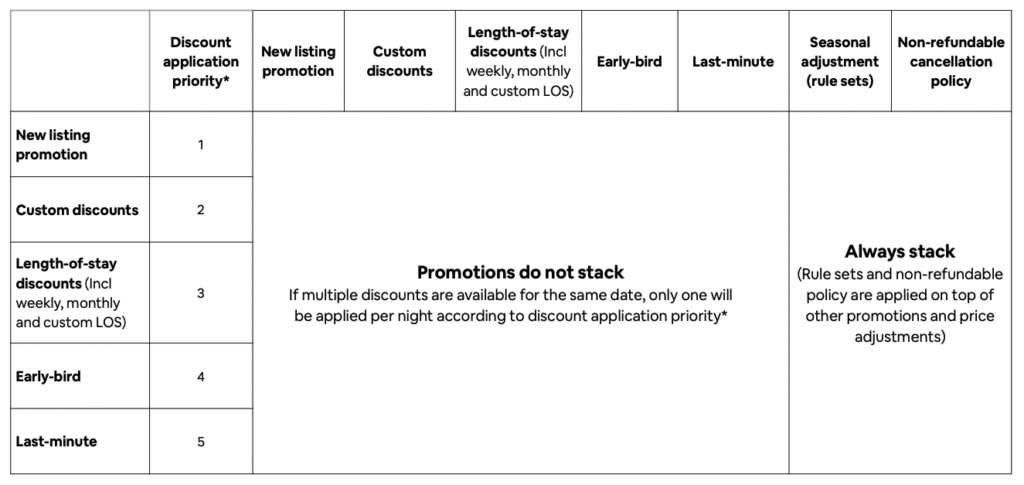
New Listing Promotion > Custom Discounts > Length-of-Stay Discounts > Early-Bird > Last-Minute
This hierarchy determines which discount takes precedence over others if multiple promotions are applicable to a reservation.
Your Airbnb Discount Strategy: The Final Takeaway
We’ve broken down the “how” and “why” of Airbnb discounts, from the seven available types to the subtle merchandising perks that nudge guests toward booking. The key lesson here is that discounts are not a sign of weakness, but a powerful, dynamic tool essential for sophisticated revenue management.
The Golden Rule: Focus on Yearly Revenue
Do not let a fixation on your nightly rate blind you to the larger objective: maximizing your annual revenue. By strategically deploying discounts, you ensure that every day on your calendar is sold at the highest optimal price—even if that price is a discounted one during a low-demand period. Charging a premium on peak weekends while accepting a lower, discounted rate mid-week is the essence of smart hosting. You are using discounts to capture weak demand before your competition, allowing you to save your premium pricing for when demand is strongest.
About Homesberg
Combine your discount and ranking strategy to unlock emore bookings; knowing the exact position affect of your discounts is what significantly boosts your revenue.
Homesberg is an all-in-one vacation rental management platform built around the must-have features hosts truly need: self-reliant market data collection, an Airbnb ranking tracker, a robust dynamic pricing engine, and seamless integrations with all major channels. No more juggling multiple tools or paying for underutilised features.
