Why Getting Bookings on Airbnb Is Harder Than It Looks
Airbnb crossed eight million active listings in late 2025. That number keeps growing. For any individual host, more supply means more competition for the same pool of guests, and the platform’s search algorithm decides which listings get seen first.
The core problem is not that guests are choosing other platforms. It is that most guests book from the first page of search results. If your listing is not on page one for the dates and filters your target guests use, your pricing and photos do not matter much, because almost nobody will see them.
Key point: Several analyses of Airbnb’s algorithm confirm that a listing’s booking conversion rate (how often someone who sees it actually books) is one of the strongest signals the platform uses to determine visibility. This creates a compounding dynamic: fewer bookings lead to lower visibility, which leads to fewer bookings. The same loop works in reverse when you improve.
This guide covers the tactics that directly affect both sides of that loop. Some are fast-acting (pricing adjustments, Instant Book activation, faster response time). Others build over months (reviews, Superhost status, listing content quality). Together, they form a practical system any host can work through.
The Booking Formula You Need to Understand
Before diving into tactics, it helps to see the structure clearly. Revenue on Airbnb depends on three variables working in sequence: Revenue = Visibility Conversion Rate Nightly Rate Visibility is whether guests see your listing at all. Conversion rate is how often views turn into bookings. Nightly rate is what each booking pays. Optimizing one variable in isolation, while neglecting the others, often produces disappointing results.
Most hosts think about pricing first, then photos. Fewer think systematically about visibility. But if your listing is on page three of results, the most beautiful photos and the most competitive price in the market still reach almost no one. Visibility is the gateway.

The sections below address all three variables, roughly in the order they compound.
1. Optimize Your Listing for Search First
Your listing is evaluated by Airbnb’s algorithm before a guest ever clicks on it. Completeness, quality signals, and behavioral data all influence where you appear in results.
 Listing completeness matters more than most hosts realize. Airbnb scores listings partly based on how complete and accurate the information is. This includes:
- At least 20 high-quality photos (cover the main spaces, outdoor areas, and any unique features)
- All amenities checked and current
- A full, specific description (not generic copy)
- House rules that are clear and proportionate
- Verified ID and host profile photo Title construction: Your title has a limited character count and displays in search previews. The most effective titles name a specific feature, location context, or guest type rather than generic room counts. A title like “Quiet Studio with Rooftop Terrace | 5 min to Old Town” performs better than “Cozy Studio Apartment” because it answers a guest’s mental question before they click. Natural language search in 2026: Airbnb now surfaces listings based on search intent, not just filters. A guest typing “quiet place near the beach for a work trip” expects Airbnb to match on meaning. Hosts whose descriptions clearly address specific use cases (remote work, couples, families, pet travel) benefit from this change.
Search visibility is a deep enough topic to deserve its own treatment. If you want a full breakdown of the 2026 algorithm and a practical weekly routine to maintain your ranking position, the Airbnb listing visibility guide covers every layer in detail.
2. Price Based on Data, Not Instinct
Pricing is the fastest-acting lever in your toolkit. It can shift your search position almost immediately, unlike reviews or Superhost status, which take months to build. Getting it right requires understanding what the market actually looks like on any given set of dates.
Why flat pricing hurts you in two directions
A fixed nightly rate is, almost by definition, either too high or too low depending on the date. In peak season, it leaves revenue behind. In the off-season, it sits above what the market supports and leaves the calendar empty. Empty nights compound the problem by weakening your conversion signal to Airbnb’s algorithm.
What data-driven pricing looks at
Competitive pricing for Airbnb needs to account for:
| Factor | What to track |
|---|---|
| Seasonality | Historical and forward demand patterns for your specific market |
| Competitor rates | What similar listings in your search results charge on the same dates |
| Lead time | How your booking window behaves at 60, 30, 14, and 7 days out |
| Day-of-week patterns | Weekday vs. weekend demand differences in your area |
| Local events | Concerts, festivals, conferences, and public holidays |
| Occupancy pace | How quickly your competitors are filling their calendars |
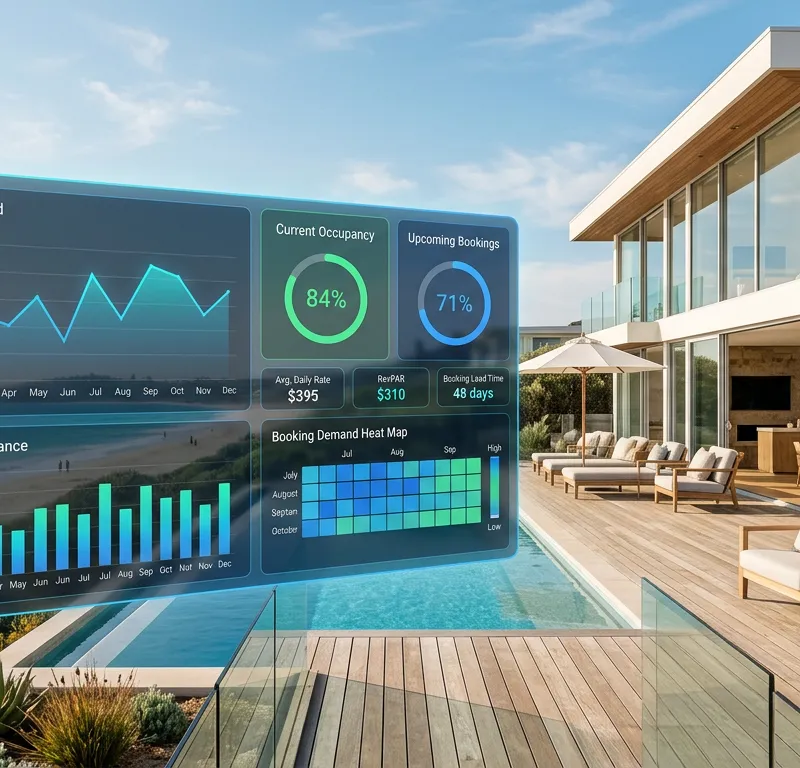
Dynamic pricing tools handle this by continuously adjusting rates based on live inputs. The shift from a static rate to a data-driven one typically improves annual revenue not by charging more per night, but by being priced right more often across the full calendar.
The visibility dimension most pricing tools miss
Here is the detail that separates an effective pricing strategy from a complete one: your nightly rate directly affects where you appear in Airbnb search results, and that ranking changes within seconds of a price adjustment. Most pricing tools optimize for demand signals without knowing where your listing sits in the search results at any given price point.
Homesberg’s search-aware dynamic pricing addresses this gap specifically. It connects pricing decisions to real-time Airbnb ranking data, so you can see how a rate change shifts your position in search before committing to it. Homesberg also tracks your live ranking position for any date range and filter combination, so you always know exactly where your listing stands in search results before making a pricing decision. Knowing that a small price adjustment moves your listing from page two to page one for a key set of dates is the kind of visibility intelligence that traditional pricing tools do not provide.
3. Make Your Photos Do the Selling
Guests decide whether to click on your listing before they read a single word. Your cover photo competes with dozens of other listings in a grid view, and that first impression determines whether someone investigates further.
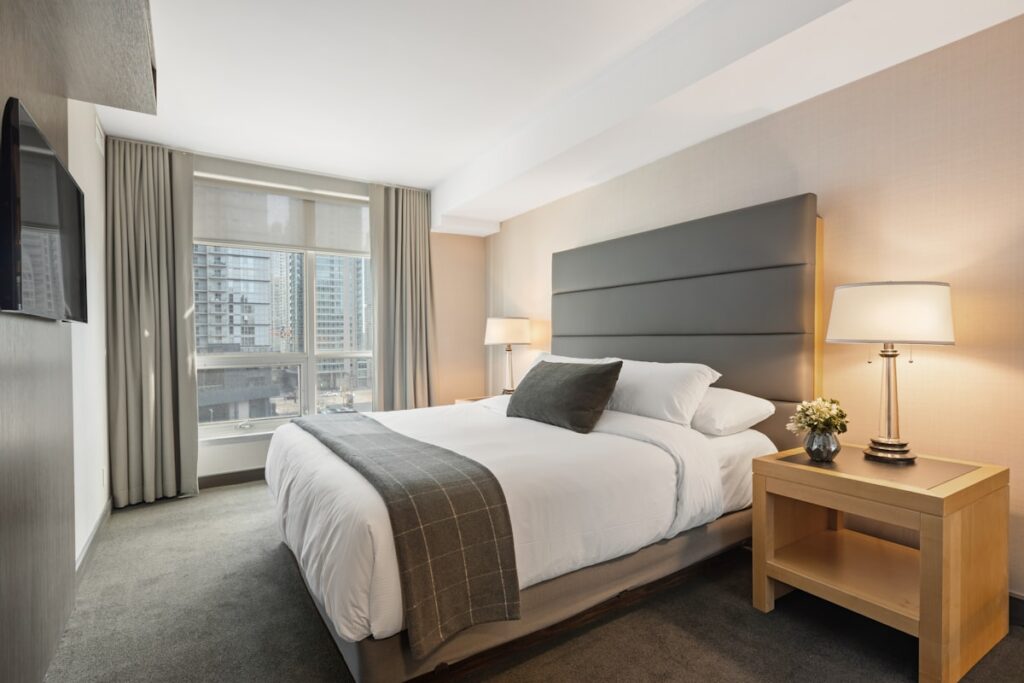
Professional photography consistently shows a measurable difference in click-through rates. The gap between a smartphone photo taken in poor light and a properly composed image shot in natural or staged light is visible to a guest in under a second.
Practical photography priorities:
- Cover photo: Choose the room that photographs best and creates the strongest emotional response. This is rarely the exterior.
- Golden hour or morning natural light: Artificial lighting produces flat, uninviting images. Shoot when daylight fills the space.
- Wide shots for context, close-ups for texture: Wide shots show the space; detail shots (quality linens, a well-stocked coffee station, a view from a window) create the feeling of staying there.
- Show your unique feature prominently: If you have a hot tub, a rooftop, a mountain view, or a fireplace, lead with it visually. That feature may be the specific reason someone books you over a comparable listing.
- 20 or more photos: More photos give Airbnb’s algorithm a stronger completeness signal and give guests fewer reasons to look elsewhere.
If professional photography is not in the budget yet, shoot on a clear day with maximum natural light, declutter every surface, and make the bed with fresh, well-ironed linens. The difference from a careful approach versus a quick snapshot is significant even without professional equipment.
4. Build Reviews Systematically
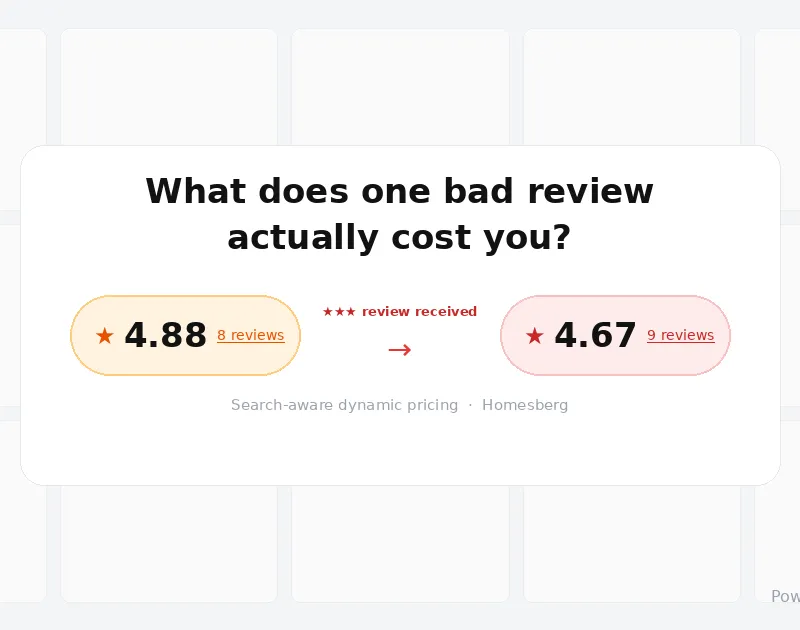
Reviews are the strongest trust signal in short-term rental marketplaces. They influence search ranking, conversion rate, and pricing power, all at once. A listing with a 4.9 average and 150 reviews is operating at a fundamentally different level than one with a 4.5 average and 20 reviews, even if the properties are otherwise similar.

For pricing specifically, higher ratings support higher rates because guests perceive risk differently at 4.9 stars versus 4.6 stars. They are more willing to pay a premium for certainty.
How reviews actually accumulate:
- Airbnb prompts both parties, but many guests skip the review even after a positive stay unless something prompts them specifically.
- Timing matters: Following up within two or three days of checkout, while the experience is fresh, significantly increases review completion.
- Review velocity matters alongside average score. A cluster of recent reviews signals current quality. An older review profile with no recent activity may raise questions in a guest’s mind, even if the average is high.
- Negative reviews cannot be deleted, but they can be responded to. A calm, professional response to a poor review often reassures future guests more than the absence of any criticism. What matters most: Consistent guest experience is the foundation. No communication tactic can substitute for a clean, accurate, problem-free stay. Every investment in the physical property, clear listing expectations, and issue resolution is an investment in the review profile, and by extension, in long-term booking rates and revenue.
5. Respond Faster Than Your Competitors
Response time is a direct ranking factor in Airbnb’s algorithm. The platform tracks both the rate at which you respond (ideally 90% or above within 24 hours) and how quickly you respond (the target is under one hour for inquiries that matter most to ranking).

Beyond the algorithm effect, fast responses have a conversion impact. A guest who sends three inquiry messages and receives a reply within minutes from one host and nothing for six hours from another has already begun deciding. The responsive host converts that guest before the others have even seen the message.
Practical approach to response time:
- Turn on notifications for Airbnb messages on your phone and treat them like professional email.
- Use message templates for the most common pre-booking questions (parking, check-in time, Wi-Fi, bringing pets). Having a well-written template ready means you can reply with a tap, not a composition.
- Set up an automated pre-booking message that acknowledges the inquiry and gives key information immediately. Airbnb allows scheduled and automated messages within its platform.
- Maintain boundaries without sacrificing speed. Speed during business hours and a reasonable window at other times is enough for most markets. Genuinely instant response at 3 AM is not what the algorithm measures.
6. Turn On Instant Book Strategically
Instant Book allows guests to confirm a reservation without waiting for host approval. Listings with Instant Book enabled appear in filtered search results that exclude non-Instant Book properties, meaning they are visible to a segment of guests that listing without it simply does not reach.
Airbnb itself treats Instant Book as a positive ranking signal, and data consistently shows that Instant Book listings receive more bookings than comparable listings without it, holding other factors equal.
The common concern is losing control over who books. This is partly addressable:
- Requirement settings: Airbnb lets you require guests to meet certain conditions for Instant Book, including government ID verification, positive review history, and a recommendation from previous hosts.
- Cancel without penalty (limited): Airbnb allows a small number of Instant Book cancellations without penalty if the guest does not meet your stated requirements or if you feel unsafe.
For most hosts in standard markets, the visibility gain from enabling Instant Book outweighs the downside risk, especially once you configure the guest requirements appropriately.
7. Work Toward Superhost Status
Airbnb’s Superhost program recognizes hosts who consistently deliver high-quality stays. Superhost listings receive a badge that appears in search results and on the host profile. Beyond the visual signal, Superhost status is associated with priority placement in search and higher conversion rates, because guests trust the badge.
The current criteria to qualify:
| Requirement | Threshold |
|---|---|
| Overall rating | 4.8 or above |
| Response rate | 90% within 24 hours |
| Cancellation rate | Less than 1% (excluding Airbnb-approved exceptions) |
| Minimum activity | 10 completed stays, or 100 nights across 3+ reservations per year |
Airbnb evaluates these metrics every quarter. Falling below any one threshold resets the clock.
The key bottleneck for most hosts is the rating. A 4.8 average requires consistent delivery across every stay. Ratings of 3 or 4 stars are not “average” to the Airbnb algorithm; they are significant negative signals that pull averages down quickly when the review count is low.
Practical focus: identify the areas of your guest experience most likely to generate a 4-star instead of a 5-star review. Common culprits are cleanliness (where a professional cleaner often pays for itself in review improvement), check-in friction, and listing descriptions that set expectations higher than the property delivers.
8. Keep Your Calendar Open and Flexible
Availability settings affect how often your listing appears in search and how many guests can actually book it. Several practices quietly reduce bookings without hosts realizing it:
- Minimum stay requirements that are too long. A three-night minimum may exclude the majority of guests searching for a weekend stay, particularly in leisure markets where two-night bookings dominate.
- Maximum stay caps set too low. Longer stays reduce turnover costs and tend to be more profitable per available day. Blocking them out of caution leaves revenue behind.
- Preparation time between bookings set longer than necessary. One day of preparation is reasonable. Two days in a competitive market means leaving nights unbooked that could have been filled.
- Calendar gaps from minimum stay rules. A two-day gap between bookings, where neither booking can fit a two-night minimum, often goes unbooked. Gap-night pricing (reducing the minimum or cutting the rate on orphan nights) recovers some of that lost inventory.
Open, flexible calendars also tell the algorithm that your listing is actively available, which contributes to overall ranking health.
9. Build Your Trust Signals Deliberately
Guests evaluate trust before they evaluate amenities. A host who looks legitimate and credible converts browsers into bookers more reliably than one with a sparse or inconsistent profile.
Trust signals on Airbnb that hosts control:
- Complete host profile: A real photo, a written bio, and a verified identity badge reduce the perceived risk of booking.
- Verified amenities: Claims about amenities (Wi-Fi speed, parking, kitchen equipment) that can be verified in photos or detailed descriptions are more convincing than a checked box with no context.
- Accurate descriptions: The single biggest driver of poor reviews is a gap between the listing description and the actual stay. Accurate descriptions may convert at a slightly lower rate initially, but they produce better reviews, fewer cancellations, and less friction, all of which compound positively.
- Response history: Guests can see how responsive you have been historically. A visible track record of fast, helpful responses reassures guests before they book.
Common Misconceptions Worth Addressing
“I just need to lower my price and bookings will come.”
Dropping price is sometimes the right move. It is rarely the only move. If your listing has weak photos, a sparse description, or a low review count, cutting the rate addresses only one dimension of why guests are not booking. The platform may still show your listing less than competitors with stronger conversion signals, regardless of price.
“More amenities automatically mean more bookings.”
Amenities that match what your specific guest segment values matter. Adding a coffee machine in a property that attracts long-stay remote workers matters. Adding a hot tub in a budget urban rental that guests use primarily for sleeping before a morning flight matters less. Relevant amenities improve conversion; irrelevant ones have diminishing returns.
“Reviews will sort themselves out if guests enjoyed the stay.”
Most guests who had a good stay do not leave a review unless prompted. The hosts with the strongest review profiles are typically not the ones who had the best guests; they are the ones who had consistent systems for encouraging feedback after checkout.
Putting It Together: A Priority Order
If you are starting from scratch or working through a booking slump, here is a practical sequence to address these factors:
- Fix the visibility floor first: Ensure Instant Book is on, calendar is open, and pricing is competitive relative to first-page listings for your upcoming dates.
- Complete the listing fully: Photos (20+), all amenities, full description, accurate house rules.
- Tune your response habits: Get response time under one hour during normal hours; use templates for common questions.
- Start a post-checkout review process: A simple, genuine message asking if the guest needs anything and mentioning that reviews are appreciated doubles completion for many hosts.
- Set a Superhost target and track it quarterly: Know exactly where you stand on each criterion and what is holding you back.
- Add a pricing strategy that accounts for visibility: Static pricing and Airbnb’s built-in Smart Pricing both leave positioning to chance. Understanding how your rate affects your search position, and adjusting accordingly, is the layer that separates hosts who fill their calendars from those who wonder why a “well-priced” listing stays empty.
Understanding how search-aware dynamic pricing connects pricing decisions to real-time Airbnb ranking data, and what that means for booking rates in competitive markets, is the layer that rewards hosts who go beyond a simple rate adjustment.
The Bottom Line
Getting more bookings on Airbnb is not about a single fix. It is about closing the gaps in visibility, trust, and conversion that cause guests to book the listing next to yours instead of yours.
The hosts who consistently outperform the market are not necessarily in better locations or with better properties. They are the ones who treat hosting as an operational discipline: they know where their listing ranks, they know their review profile, they price with awareness of the competitive context, and they respond to guests as if every interaction affects the next one, because it does.
Start with what you can change this week: pricing, Instant Book, response time. Then build toward the longer-term signals that compound: reviews, Superhost qualification, and listing quality. Progress on each layer feeds the next.
About Homesberg
Homesberg is a search-aware dynamic pricing platform built specifically for Airbnb hosts. Unlike traditional pricing tools that optimize for demand in isolation, Homesberg shows you how your rates affect your actual search position in real time, so you can price with full visibility into where your listing appears on Airbnb’s search results page.
Start your free 14-day trial to see where your listing ranks today, and what a price adjustment would do to that position.