Your listing exists. Guests just can’t find it.
That’s the situation many hosts are in right now, not because their property is bad, but because Airbnb’s search engine has grown significantly more sophisticated. In 2026, the algorithm evaluates hundreds of signals per search query and personalizes results for every individual guest. A listing ranked third for one traveler might appear on page four for another searching the same city on the same dates.
The good news: the underlying logic of how Airbnb ranks listings is not a complete mystery. It follows clear principles, most of which reward hosts who genuinely show up for their guests and manage their listings actively. This guide covers what those principles are, where hosts most often lose ground, and what you can do this week to start moving in the right direction.
How Airbnb’s Search Algorithm Works in 2026
Airbnb has never published a complete ranking formula. What the platform has confirmed, and what extensive observation of listing behavior across thousands of properties has made clear, is that the algorithm operates in successive layers.
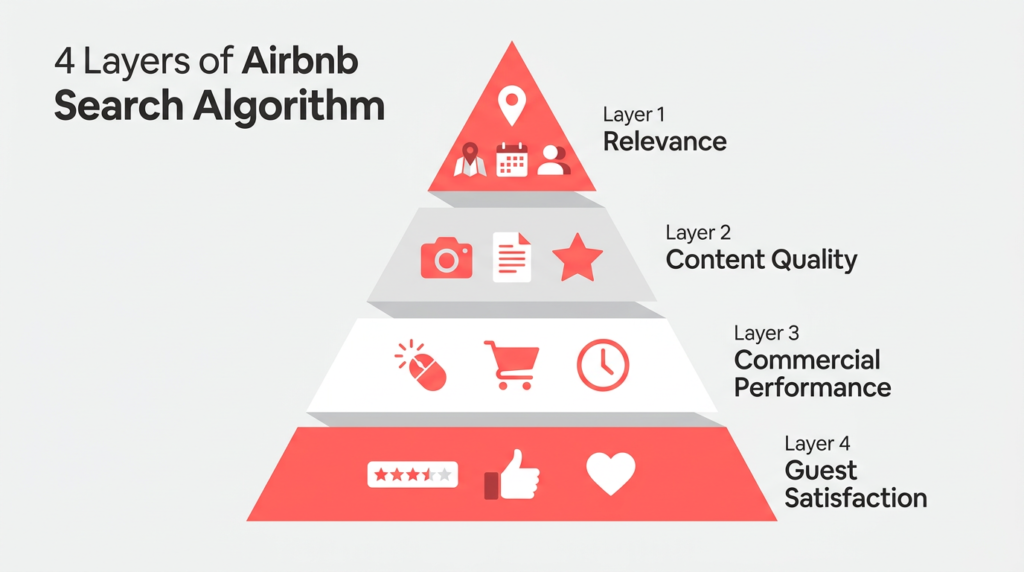
Think of it as a filter cascade rather than a single score:
- Relevance: Does your listing match the destination, dates, guest count, and active filters? Listings that don’t pass this layer never appear at all.
- Content quality: Are your photos clear and complete? Does your description match the visuals? Is your listing information consistent and detailed?
- Commercial performance: How often do guests click on your listing when it appears in results? Of those who click, how many actually book? How fast do you respond?
- Guest satisfaction: What do recent reviews say about your property? Are there disputes or cancellations on record?
Each layer narrows the field further. A listing with excellent photos but slow response times gets filtered out at layer three. A listing with strong reviews but an inconsistent calendar gets deprioritized across all layers. Key point: The algorithm is not looking for the “best” listing in absolute terms. It is looking for the listing most likely to result in a completed, dispute-free booking for the specific person searching right now. That distinction changes what you should optimize.
The Two Signals That Matter Most: CTR and Conversion
Several guides covering the 2026 Airbnb algorithm converge on the same finding: click-through rate and booking conversion rate are the two most impactful commercial signals.
Click-through rate (CTR) measures how many people who see your listing in search results actually click on it. Conversion rate measures how many of those who click go on to book. Low CTR tells the algorithm your listing isn’t attracting attention. Low conversion tells it your listing is disappointing people once they arrive.
What affects CTR:
- Your cover photo (brightness, composition, first impression)
- Your title (clarity and specific benefit, not generic descriptions)
- Your price relative to comparable properties on the same dates
- Any badges displayed (Guest Favorite, Superhost)
What affects conversion:
- Whether your photos and description accurately represent the space
- How clearly your amenities, house rules, and check-in process are explained
- Your cancellation policy (stricter policies reduce bookings at the margin)
- Your response time to inquiries before booking
If you notice your listing views are holding but bookings have dropped, the problem is likely conversion, not visibility. If views themselves are declining, CTR is the lever to pull first.
Pricing Competitiveness Is a Ranking Factor, Not Just a Revenue Lever
This is where many hosts lose ground without realizing it. Airbnb compares your rate against similar listings in the same area, for the same dates, with comparable amenities and ratings. If you are priced significantly above comparable properties without a clear differentiator, the algorithm starts showing you less, because your conversion rate will be lower and that feeds back as a negative signal.
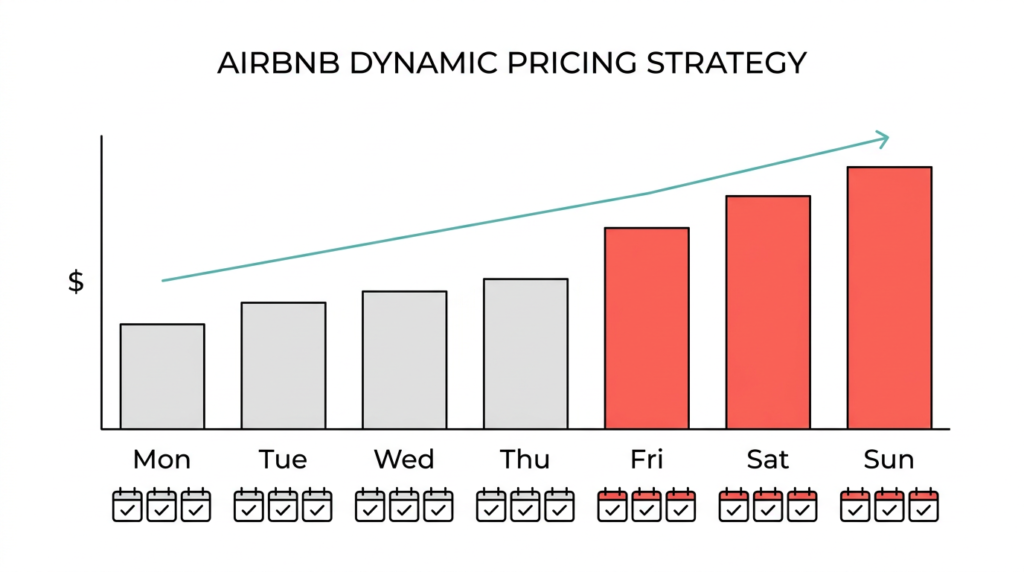
This does not mean the lowest price wins. A property priced at $350 per night that converts well will consistently outrank a $200 listing that guests scroll past or abandon on arrival. What matters is that your price makes sense relative to what you offer and what your local market expects.
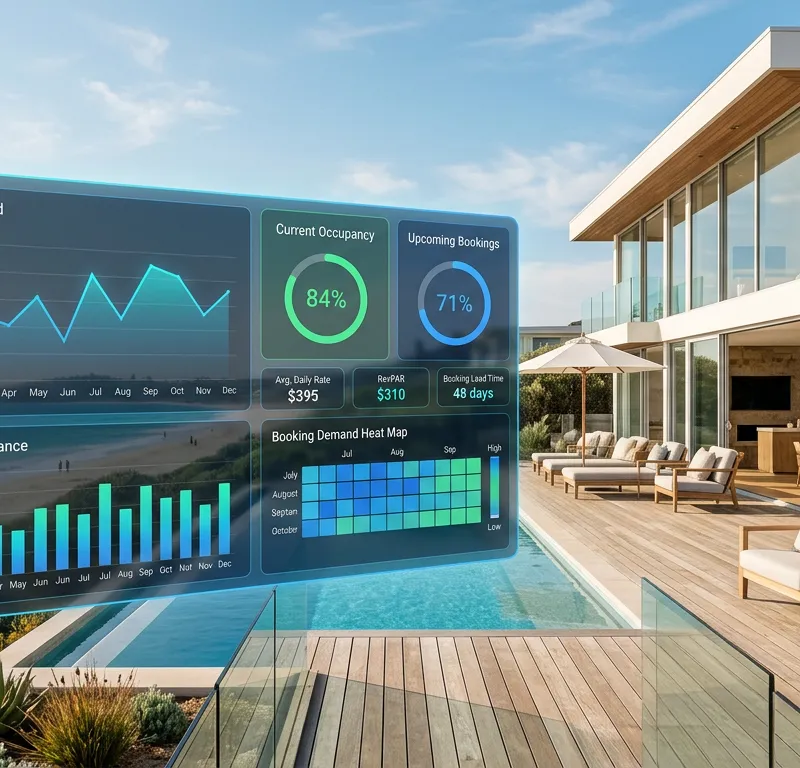
Adjusting prices in small, frequent increments rather than making infrequent large changes also tends to produce better results. Weekly adjustments signal to the algorithm that the listing is actively managed, which feeds into what the platform now calls “listing vitality” (covered below). Tools that link pricing decisions to real-time search visibility data, rather than just demand forecasts, can help hosts stay within competitive bands without over-discounting. Homesberg’s search-aware dynamic pricing takes this a step further by factoring ranking position into pricing decisions, helping you find the rate that keeps your listing both visible and profitable.
Wondering where your listing actually ranks right now? Homesberg’s rank tracker shows your exact position in Airbnb search results for any date range, using the same filters real guests apply. Sign up and check your ranking in minutes.
Listing Content: Beyond Keywords
In 2026, Airbnb’s search has moved meaningfully toward natural language processing. Guests increasingly search with intent-based phrases: “quiet apartment near downtown with fast WiFi and parking” rather than just a city name. The platform now reads descriptions, amenity tags, and even review text to understand what a listing actually offers.
What this means in practice:
- List every amenity accurately. Unchecked amenities that guests mention in reviews (like a well-equipped kitchen or fast Wi-Fi) create a mismatch the algorithm notices.
- Write descriptions that match how guests search, not how hosts think about their property. If you have a dedicated workspace, say so explicitly.
- Make sure your photos prove what your text claims. A description that mentions a “cozy reading nook” with no photo of it is a consistency gap.

On photos specifically: data from property management companies managing large portfolios consistently shows professional photography producing 20-30% higher CTR than amateur alternatives. Refresh your cover photo at minimum once per season. Lifestyle shots (a well-set breakfast table, a workspace in use, an evening terrace) tend to outperform empty-room shots because they help guests visualize the experience.
You can also source additional lifestyle images from free platforms like Unsplash when you need supplementary visuals that complement your own photography.
Response Time and Communication Signals
Airbnb is explicit about this one: a response rate below 90% or an average response time measured in hours will hurt your ranking. The reason is straightforward. Slow communication correlates with poor guest experience, and the algorithm is designed to surface listings that are more likely to close bookings smoothly.
 Key point: Aiming for sub-15-minute response times on initial inquiries, combined with a 90%+ response rate, is a threshold that appears consistently across platforms tracking large-scale listing performance. Missing it creates a measurable drag on your position.
Enabling Instant Book removes the response-time factor from the conversion equation entirely for many guests. Not every host is comfortable with Instant Book, and there are legitimate reasons to require approval for some properties. But if response-time anxiety is your main hesitation, consider enabling it with appropriate guest requirements (verified ID, positive reviews) rather than leaving it off by default.
Reviews: Star Ratings Are Not the Full Story
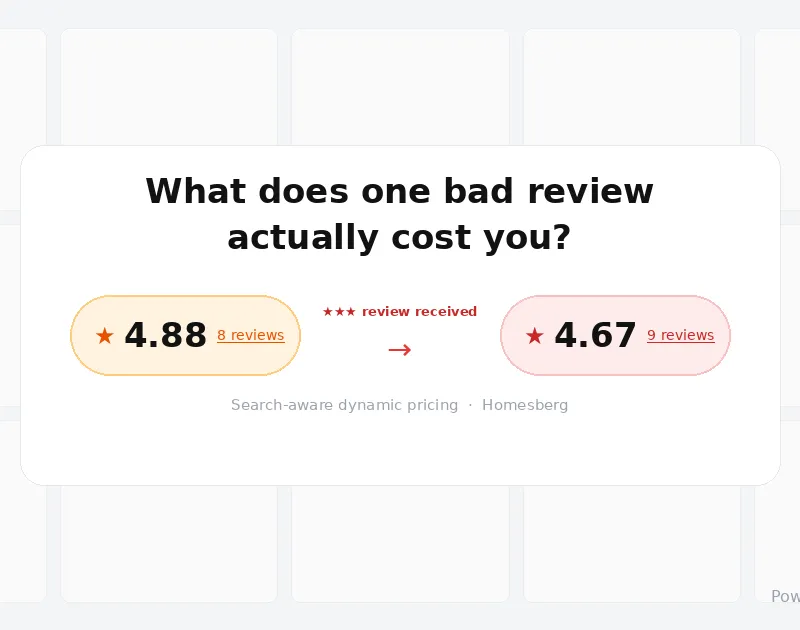
A 4.8+ overall rating matters. But in 2026, Airbnb’s system goes beyond the aggregate number.
The algorithm reads review text and factors specific mentions into relevance scoring. A listing with reviews frequently noting “spotless kitchen,” “fast Wi-Fi,” or “excellent communication” will appear more prominently when guests search for properties with those qualities. This is a meaningful shift: you can influence your relevance for specific search intents by ensuring the guest experience consistently delivers on the things guests care enough to write about.
Practical implications:
- Track what guests mention most in reviews. Those mentions are your relevance keywords.
- If a feature matters to your target guests (workspace, pool access, easy parking), make sure it’s a real highlight, not just listed in passing.
- A gentle follow-up message 24 hours after checkout (human-sounding, not templated) meaningfully increases review rates for most hosts.
Recent reviews also carry more weight than older ones. A 4.6-rated listing with six strong reviews in the last 90 days will often outperform a 4.9 listing with no recent activity.
Listing Vitality: The Active Management Signal
One of the more interesting 2026 algorithm developments is what some hosts are calling the “vitality” concept. Airbnb appears to reward listings that show signs of active management: recent calendar updates, small price adjustments, quick responses, new wishlist saves.
The inverse is equally true. A listing that has not been touched in weeks, with a static calendar, no price changes, and no recent bookings, gets gradually deprioritized. The algorithm interprets inactivity as a signal of reduced reliability or host engagement.
Simple habits that feed the vitality signal:
- Update your calendar at least once per week, even if nothing has changed.
- Make small price adjustments regularly rather than setting prices and forgetting them.
- Complete your listing profile to 100% if it isn’t already, and revisit it quarterly.
- Update at least one photo per season.
The platform also runs A/B tests regularly, temporarily boosting certain listings to measure how they perform with more visibility. If your listing is inactive during one of these test windows, you get no benefit from it. Staying active increases the chances your listing is in a good position when Airbnb tests it.
Common Mistakes That Quietly Hurt Your Ranking
| Mistake | Why It Hurts |
|---|---|
| Cover photo that doesn’t match the space | Low CTR; guests feel misled and bounce |
| Strict cancellation policy as default | Reduces conversion rate, especially for longer-lead bookings |
| Minimum stay too high for your market | Creates calendar gaps the algorithm reads as low demand |
| Listing amenities that don’t exist | Review mentions of inaccuracy lower your accuracy score |
| Generic title (“Nice apartment in the city”) | Low CTR; no clear reason to click over comparable listings |
| Responding to inquiries hours later | Direct ranking penalty; signals low host engagement |
A useful self-audit: ask someone unfamiliar with your property to browse your listing as if they were a guest and note anything confusing or missing. An outside perspective almost always reveals a friction point you no longer notice.
What No Longer Moves the Needle
To focus your effort on what matters, it also helps to know what has become less relevant:
- Keyword stuffing in titles and descriptions. The natural language shift means legible, guest-facing copy outperforms keyword-dense descriptions.
- Star rating alone. A 4.9 from three years ago with no recent reviews carries less weight than a 4.7 with consistent recent feedback.
- Long-form descriptions that don’t answer questions. Airbnb guests skim. A 1,200-word description with no structure is less effective than a tightly organized 400-word one that answers the first five questions every guest has.
A Weekly Visibility Routine
Visibility is not a one-time optimization. It’s an ongoing practice. Here is a routine that keeps the most important signals healthy without requiring significant weekly time investment:
Every week:
- Open your calendar and update at least one date or rate, even a minor adjustment.
- Check your response time stat in Airbnb’s performance dashboard and clear any pending inquiries.
- Review the last two search results in your market manually (private browsing, no login) to see how comparable listings are positioning themselves on price and photos.
Every month:
- Read your last 10 reviews and note recurring themes, positive or negative.
- Compare your CTR and conversion rates in Airbnb’s insights tab against the previous month.
- Refresh or swap out one photo that feels dated.
Every quarter:
- Revisit your title, description, and amenities list with fresh eyes.
- Adjust your cancellation policy and minimum stay requirements based on seasonal patterns.
- Consider whether your listing fits cleanly into a category (family-friendly, remote work, romantic getaway) and whether your content signals that clearly.
Conclusion
Airbnb’s algorithm is not random, but it is personalized, dynamic, and designed to serve guest intent rather than host preferences. The hosts who consistently rank well are those who treat their listing as a live, actively managed product: pricing that responds to the market, content that accurately reflects the experience, communication that removes friction, and reviews that build a useful signal over time.
None of the tactics in this guide require a significant budget. Most require only attention and consistency. Start with the area where your current metrics are weakest (CTR, conversion, or reviews) and run a focused improvement for 30 days before moving to the next.
For hosts who want to connect pricing strategy directly to search positioning, Homesberg is built around this exact principle: rate decisions informed by where your listing sits in search, not only by calendar occupancy. It’s worth understanding how that connection works, regardless of which tool you use.
If you found this useful, our guide on Airbnb ranking factors goes deeper on the specific metrics Airbnb tracks and how hosts can monitor their own position over time.
About Homesberg
Homesberg is a vacation rental analytics and pricing platform built for Airbnb hosts and short-term rental operators. Its core tools include a real-time Airbnb rank tracker that shows where your listing appears in search results for any date range and guest filter, a search-aware dynamic pricing engine that connects rate decisions to live ranking data, and a market benchmarking suite that shows how your listing compares to your competitive set.
All of it is built around one principle: pricing and visibility decisions produce better outcomes when they are informed by what is actually happening in search results, not only by demand forecasts.